
The vulnerability of a modern state is no longer measured solely by its borders, but by the functionality of its digital infrastructure. In The Hague, a high-ranking official of the International Criminal Court recently discovered that his digital life could be extinguished overnight. Visa, Mastercard, Airbnb, and Google accounts were suspended—not by a court of law, but by the service providers themselves. His offense was not illegal; it was political. He had worked on an arrest warrant that displeased Washington.
This incident serves as a stark reminder: a digital service is governed by whoever owns it. When a state runs on foreign software, it effectively subjects its citizens and officials to foreign jurisdiction.
The Great June Pivot
In a single week in June, the European Union signaled a decisive shift away from Silicon Valley. The transition was not merely legislative but symbolic and operational:
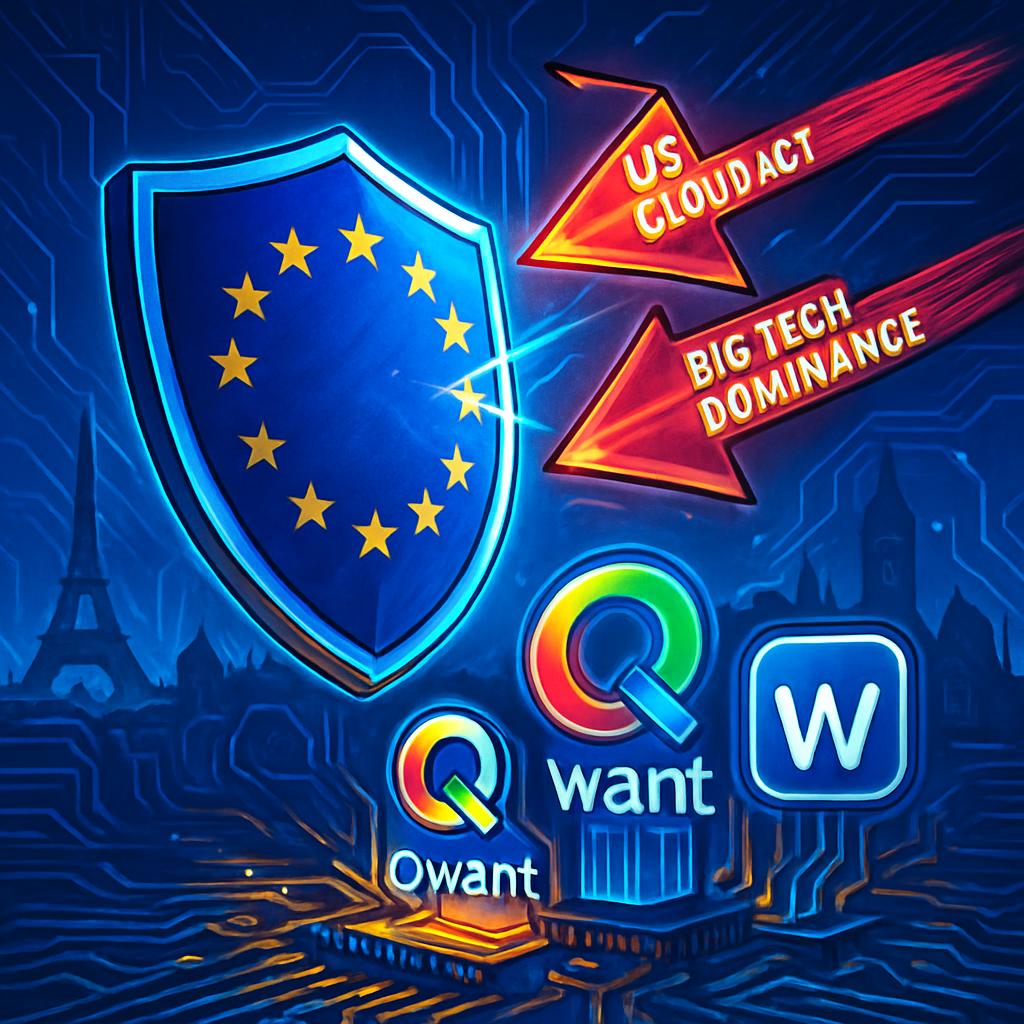
- Search Engines: On June 4, the European Parliament replaced Google with Qwant, a French search engine that prioritizes privacy and operates outside the reach of American data-gathering laws.
- The Tech Sovereignty Package: On June 3, the European Commission unveiled a massive legislative framework. It imposes strict limits on US cloud providers regarding sensitive government data and mandates "European preference" in digital procurement.
- The Software Stack: By June 9, a coalition of European firms launched EuroOffice, an open-source alternative to Microsoft 365, designed to be compatible with existing files but hosted on sovereign servers.
"To run a European state on American software means that American law applies to European officials, whether Europe likes it or not."
The Cloud Act Trap
The catalyst for this urgency is the US Cloud Act. This legislation compels American companies to provide data to US authorities regardless of where that data is physically stored. The consequences are already visible. In the Netherlands, it was revealed that Microsoft handed over the emails and meeting minutes of Dutch officials to the US House of Representatives.
The dependency is not just administrative; it is existential. If Washington were to "freeze" the digital contracts used by the Dutch tax authorities, the state would lose approximately half a billion euros in revenue per week. This raises a critical question for every European nation: How much of the essential machinery—tax collection, healthcare records, and identity systems—runs on technology we do not control?
Software as a Relationship, Not a Product
Transitioning away from American tech is significantly more complex than the recent shift away from Russian gas. Gas is a commodity; once the pipe is closed and a new one opened, the transaction is complete. Software, however, is a continuous relationship.
Providers can unilaterally change terms, hike prices, or revoke access. We have seen this with European businesses whose visibility was decimated by Facebook’s algorithmic changes. In more extreme cases, such as France’s decade-long reliance on the American surveillance firm Palantir, the data becomes "trapped." The contracts are often structured so that retrieving one's own data is technically and legally prohibitive.
Rebuilding the Stack: Floor by Floor
Europe is now attempting to replace the entire digital "building" simultaneously:
- The Ground Floor: Search engines (Qwant) and basic browsing.
- The Office: Productivity suites (EuroOffice) and operating systems (shifting from Windows to Linux).
- The Core: Data centers, AI (Mistral), and sovereign satellite constellations to bypass systems like Starlink.
- The Penthouse: Payments. Systems like Wero aim to bypass the Visa-Mastercard duopoly, ensuring that a political dispute in Washington cannot stop a European citizen from buying a coffee in Rome.
The Financial Paradox
Despite this legislative push, Europe faces a profound financial contradiction. While the number of European tech companies has tripled in a decade, the capital fueling them often comes from US pension funds. When these companies succeed, the profits flow back across the Atlantic.
Furthermore, the average European investor is inadvertently undermining this sovereignty. Most retail "Accumulation Plans" (PACs) or global ETFs are heavily weighted—often over 50%—toward American equities.
"The Italian saver building a private pension is unknowingly financing the very giants from which Europe is desperately trying to decouple."
Conclusion: A Late Payment for Freedom
Europe is arriving at the realization of its digital servitude late and at a high cost. For twenty years, the continent traded its data for "free" services, only to realize that the price was its freedom of choice and political autonomy.
Whether this "Tech Sovereignty Package" will succeed or stall among 27 competing governments remains to be seen. However, the lesson remains clear: there is a fundamental difference between using a tool and depending on it. It is a lesson usually learned at the exact moment the tool stops working.