
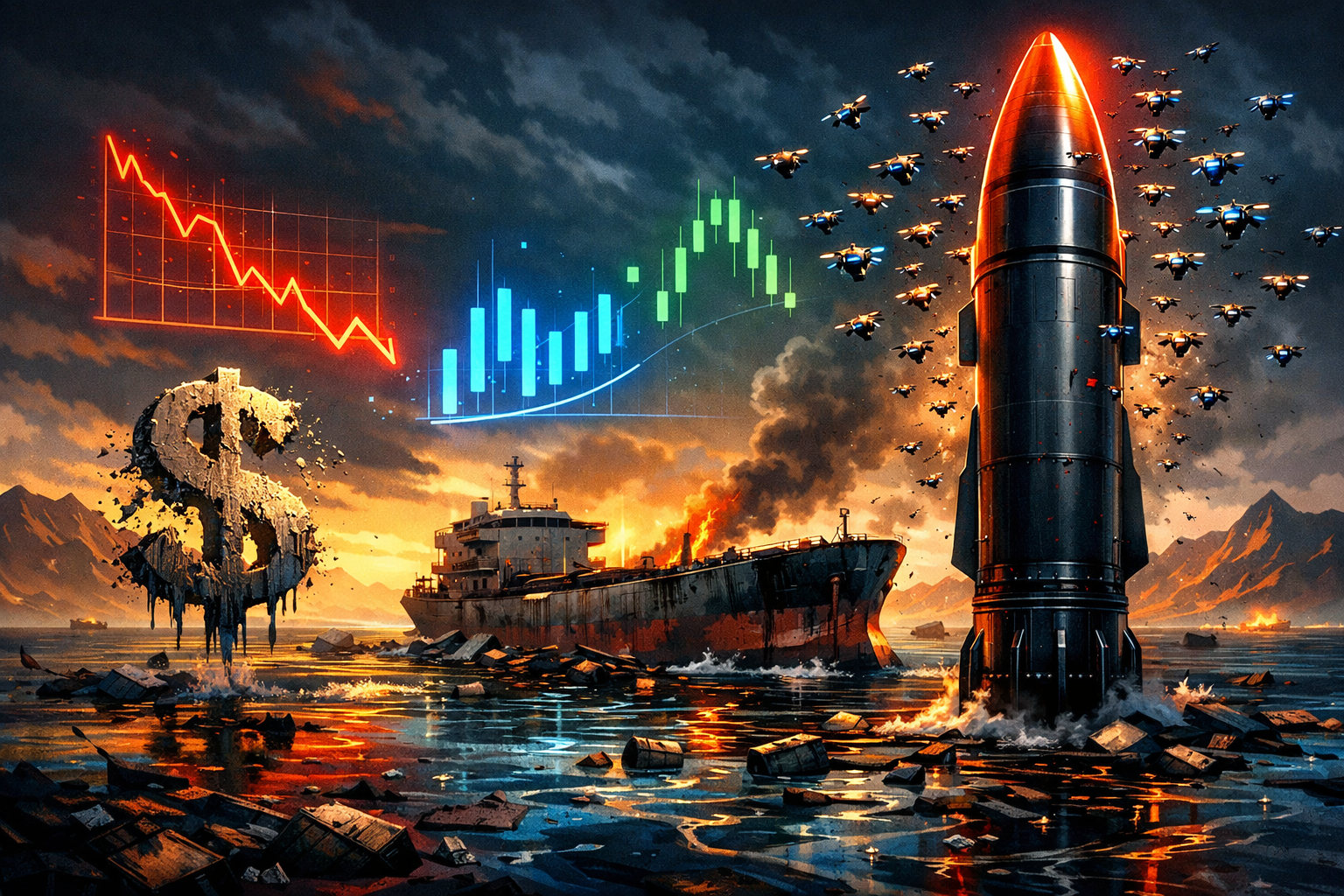
While Wall Street celebrates new record highs for the S&P 500 and the NASDAQ, a quiet but profound shift is occurring in the Indian Ocean. The divergence between financial sentiment and physical reality has reached a breaking point. While algorithms trade on the narrative of an imminent peace, the maritime industry tells a different story: the "Rich Star" tanker recently entered the Sea of Oman, observed the military reality, and promptly turned back. This single maneuver highlights a critical misunderstanding in mainstream reporting. The crisis is no longer just about the Strait of Hormuz—the "door"—but about the Sea of Oman, which has become an impassable "wall."
The $40 Abyss in the Oil Market
The most alarming indicator of this decoupling is found in the "basis" of Brent crude oil. Currently, the price for physical delivery—what refineries are paying right now—stands at $140 per barrel. Conversely, the futures contract for May delivery is trading near $100. This $40 gap represents a massive speculative bet that the geopolitical situation will normalize within weeks.
However, data from prediction platforms like Polymarket suggests this optimism is misplaced. The estimated probability of the Strait reopening by May has plummeted from 50% to 24%. While markets price in a "Trump Peace," the physical flow of energy continues to evaporate.
A Historic Energy Shock
The International Energy Agency (IEA) has warned that the current situation represents an energy shock more severe than the crises of 1973, 1979, and 2002 combined. The numbers provided by Bloomberg confirm the severity of the logistics collapse. Between February and March, the flow of petroleum products through the Strait of Hormuz saw staggering declines:
- Fuel oil: -88%
- Jet fuel: -85%
- Liquefied Gas: -65%
- Total daily ship traffic: -94%
The consequences are already reaching Europe. In the Netherlands, KLM has canceled 160 flights in a single month due to fuel costs. Qatar, a primary gas supplier for Italy, has seen 20% of its export capacity destroyed—damage that will take years, not weeks, to repair.
The Asymmetry of Modern Warfare and US Debt
The conflict has also exposed a brutal mathematical reality in military spending. Iran utilizes drones costing approximately $30,000 each, while the United States employs interceptor missiles costing $4 million per shot. This ratio of 1:130 is unsustainable. The Pentagon has already admitted to spending over $11 billion in the first six days of the conflict, with some estimates putting daily costs at $1.5 billion.
This expenditure adds to a US national debt that has surpassed $39 trillion. As the US Treasury threatens secondary sanctions against Chinese banks to curb Iranian influence, it inadvertently accelerates "de-dollarization." Major foreign holders of US debt, particularly China and Japan, are increasingly distanced from the dollar, forcing the Federal Reserve into a position where it may eventually need to print money to purchase the debt that others no longer want.
Impact on the European Economy: Mortgages and BTPs
For the European investor, this global instability translates directly into local financial pressure. The resulting inflation will likely force the European Central Bank (ECB) to maintain high interest rates for longer than anticipated. This has three immediate consequences:
- Variable-rate mortgages: The expected relief in monthly payments may be delayed or reversed.
- BTP Spreads: Italy, with a debt-to-GDP ratio of 135%, remains highly vulnerable to bond market turbulence.
- Energy Bills: Since Italian gas prices are indexed to the Dutch TTF, which follows global LNG trends, the loss of Qatari capacity suggests a significant spike in winter heating costs.
Strategic Portfolio Adjustments
In a time of "energy uncertainty," a portfolio designed for peacetime is no longer sufficient. The current environment demands a shift in strategy. While periodic accumulation (DCA) remains a valid long-term tool, tactical adjustments are necessary:
- Increased Liquidity: Maintaining a significant cash position (up to 35%) provides a buffer and the ability to capitalize on future volatility.
- Commodity Exposure: Gold and raw materials serve as essential insurance against currency devaluation and supply shocks.
- Bond Duration: A preference for short-term government bonds (BTPs) over 20- or 30-year maturities reduces exposure to interest rate volatility.
The lesson of the "Rich Star" is clear: the most important truths are often found in the silences of the physical world, not the noise of the trading floor. The conflict has not been resolved; it has merely been paused, and the shockwaves are still en route to the consumer.